
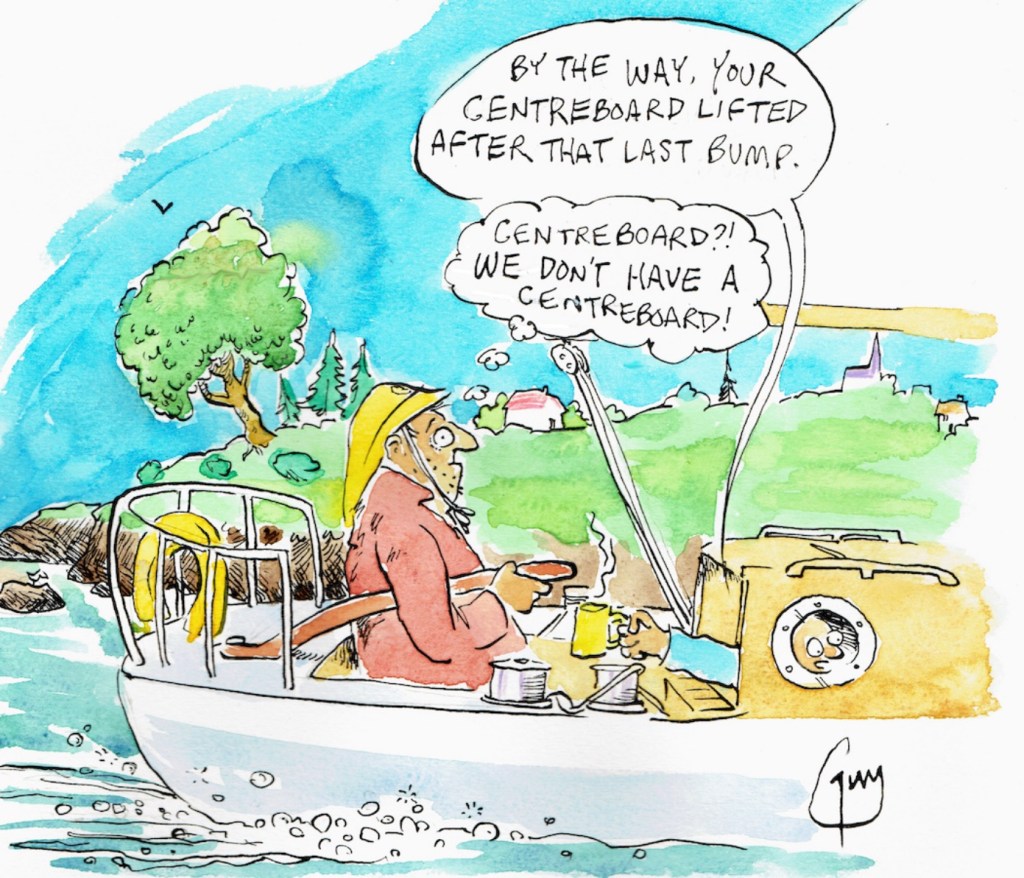
You may have heard this saying:
‘There are two types of sailors: those who have run aground, and those who lie about it.’
If running aground means literally running onto ground, then what is running onto a… sunken boat? Should that be called ‘running aboat’? Or boated?
Well, that’s what happened to us recently, after only a few sunny morning hours of sailing across from Phoebus to Norfolk. Yeah, yeah, those armchair sailors will say I should have seen the warnings, perhaps at least that DANGER buoy placed nearby to warn of, you guessed it: Danger?
I can only say what was going through my brain just before impact. Watching our depth carefully, we should have been in deep enough water. Kelly was already on the bow, readying our anchor. I saw that buoy, but being white it registered as a NO WAKE buoy, as it is located well-inside a popular anchorage. The words DANGER weren’t facing me. Ok, enough excuses. In any case, it happened.
A slow stoppage, a mild, almost silent crushing sound as our keel ground over onto, into whatever it was. Seemingly like some hard sand. Not a hard surface. So not to worry. But what’s a sailor to do when it’s an almost low and ebbing tide? We immediately put out the genoa to pull us over, raising the keel, gunning the motor. And we did move a bit further…. But not over and certainly not off. We had in fact moved over and further onto whatever it was. From the deck it appeared as a mound of underwater growth. Time for that embarrassing phone call.
Not until the friendly and professional TowboatUS guy showed up, did we learn that we had struck a sunken boat. Hmmm.
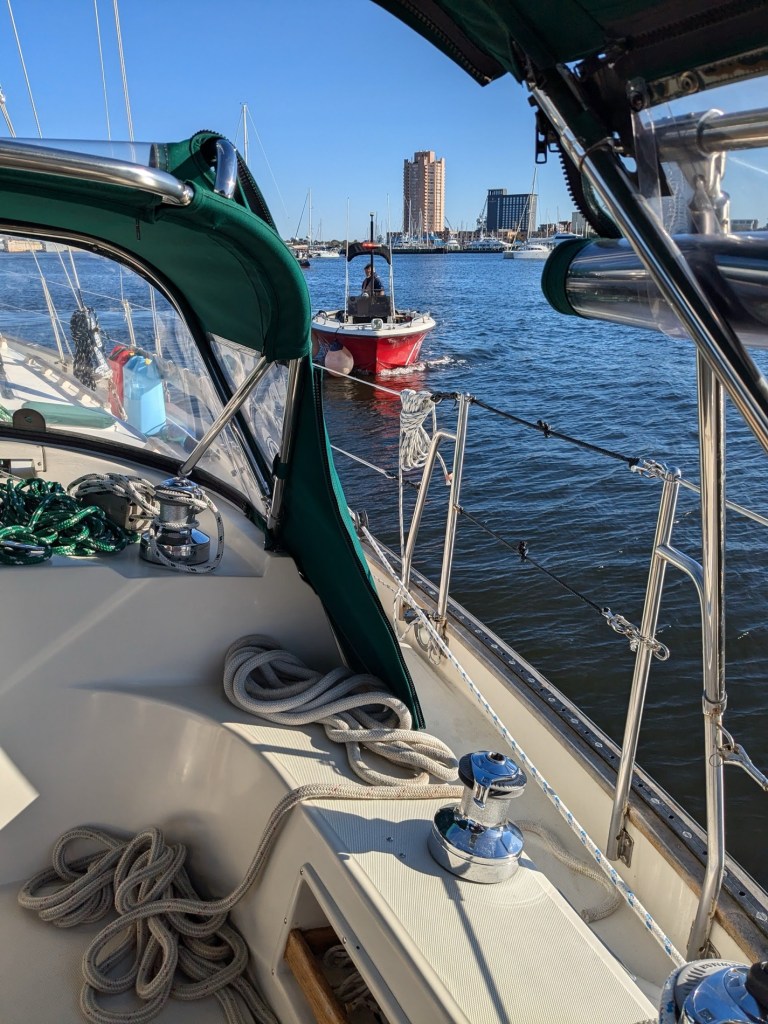
Thanking ourselves again for paying for towing insurance, he showed up about five minutes after I called the dispatch. Robert, our friendly neighborhood tow boat captain, gave us the local history of what we had boated upon. A local man, of renowned vagrant character, had run-ins with local authorities, and had previously lived aboard the vessel, which was said to have sunken more than once already in the area. Eventually, where it had been anchored in the same spot, became a permanent fixture. No, he would not pay for its salvage removal.
The Coast Guard simply added a white buoy to mark its location.
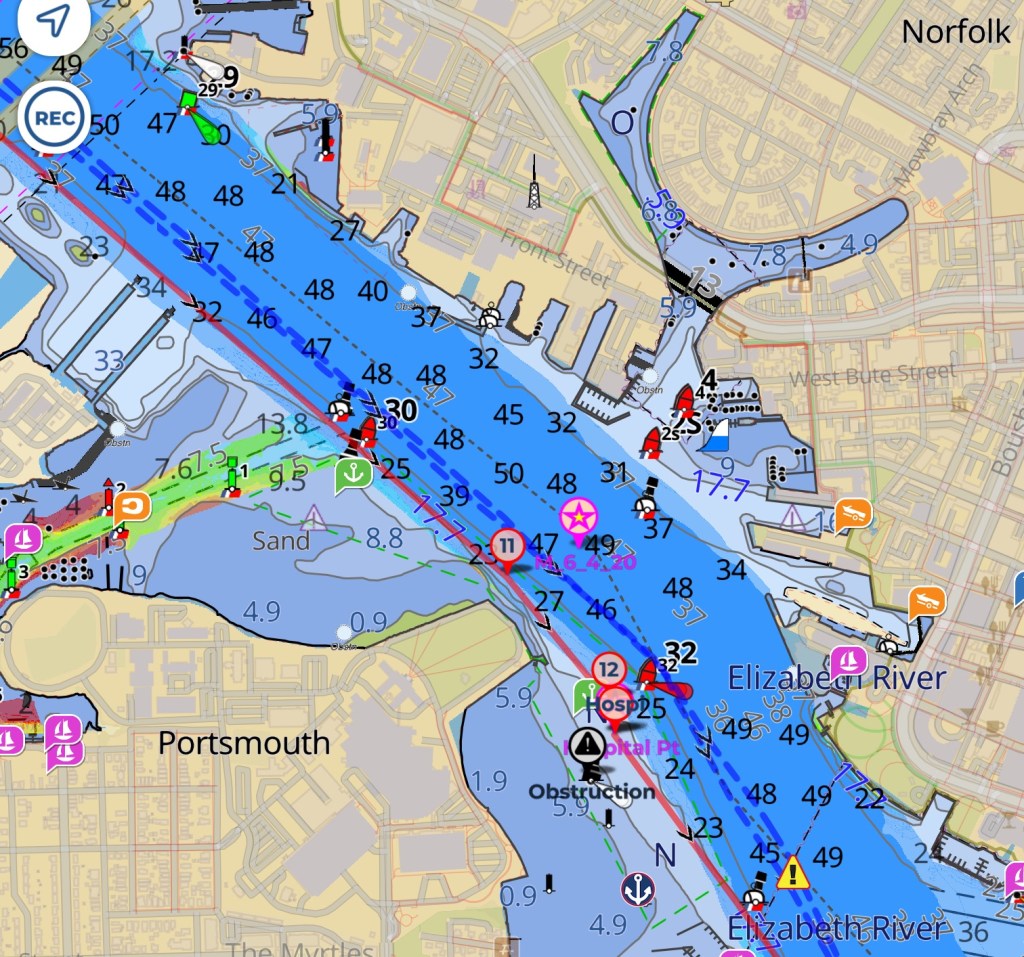

Robert became our friend, rafting up with Fayaway for the next four hours, sharing stories of local lore and yore. He cautiously and repeatedly tried pushing and pulling to no avail. We presumed that Fayaway’s keel was stuck into the cabin roof, as every time we applied pressure in any direction, we could see lots of bubbles from around the sunken vessel, as we jostled it to and fro. I attached our GoPro camera and stuck it into the murky water for a glimpse of…

Let’s be careful here, and avoid rudder damage! We can hopefully trust the Pacific Seacraft’s super heavy skeg design.
Long story short, the trusty tide came up, we floated up with it, and we’re pulled safely off.
Robert followed along with us as we zigzagged around the anchorage, testing steering, lock to lock, and feeling for any obvious potential damage. Nothing apparent, so we anchored, sent Robert away with profuse thanks, and settled in for the evening with happy hour.
The next morning we continued on our merry way – down the ICW.
Epilogue:
A few weeks later we hauled Fayaway for a thorough cleaning and inspection. All was good with regards to any possible damage. It was not a grounding, but a soft crunch through the flimsy parts of another boat cabin top. A few scratches in the paint. She’s a tough boat! We had her thoroughly inspected by not only the marina professionals, but also by the owner of Pacific Seacraft. We ended up doing more maintenance. Read about it in a later post
 SV Fayaway
so much fun m missing!
LikeLiked by 1 person
We’ll see what really is going on tomorrow. We found a local place to provide a short haul. Stay tuned!
LikeLike
Well, it’s supposed to be an adventure! Anything worth salvaging from the sunken boat? Dubloons? Old bottles of fine wine?
LikeLiked by 1 person
We wish! 😄
LikeLike
Pingback: Gudgeon Curmudgeon – SV Fayaway