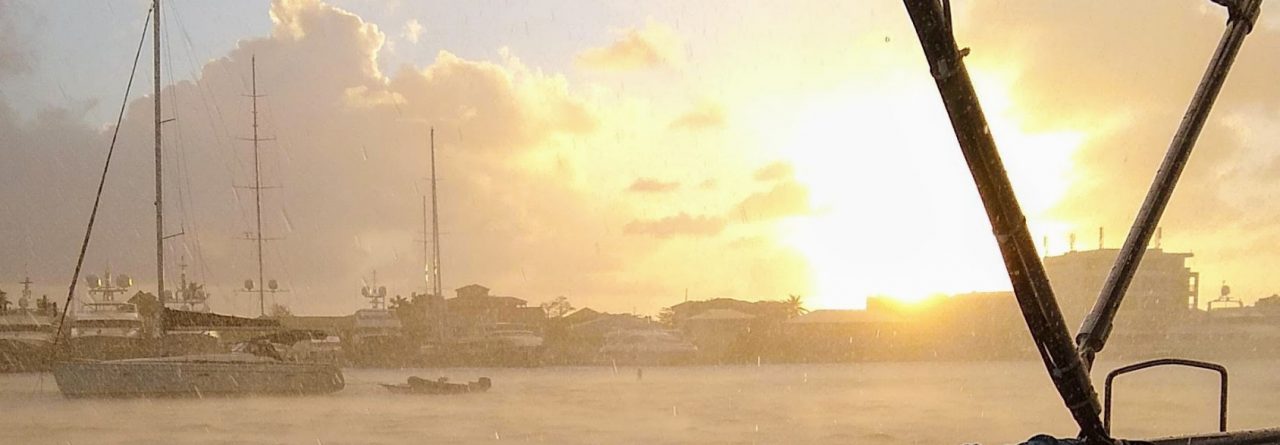
Having topped up our water, and waited awhile for the tide to rise, it was time to depart Queens Creek. Our OCC friends Bill and Chris helped with our lines as we backed out of their dock. We waved a bittersweet farewell to our friends, whilst accepting that pushing through shallows of muck is only a benefit, to perhaps remove a few tenacious barnacles from the keel.

Knowing that the weather forecast called for dead-calm, we didn’t bother unzipping our lazy bag, protecting our mainsail from the relentless sun for another day. Furler lines and sheets remained coiled for the next five hours to arrive in Yorktown.
Calm weather is a double-edged saber: wonderful for a quiet evening at anchor in an open roadstead. But it means hours of droning vibrations from the diesel iron genny for as long as you expect to arrive, anchor and be settled with a beverage at that desired destination before sunset. At least we enjoyed smooth ride and slacking tide, aiming west toward a beautiful setting sun over the York River that calm evening.
Kelly dropped our 55 pound Spade anchor through 13 feet of brown water onto a presumably mucky bottom just offshore of Redoubts 9 &10. Good for holding firm as the tide begins to ebb. A strong stone’s throw from Fayaway’s bow resided her sister ship, Seneca, with friends Mike and Lynda aboard.
Yorktown
Redoubts 9 & 10?? From Oxford dictionary: “A temporary and supplementary fortification usually square or polygonal, and without flanking defenses.”
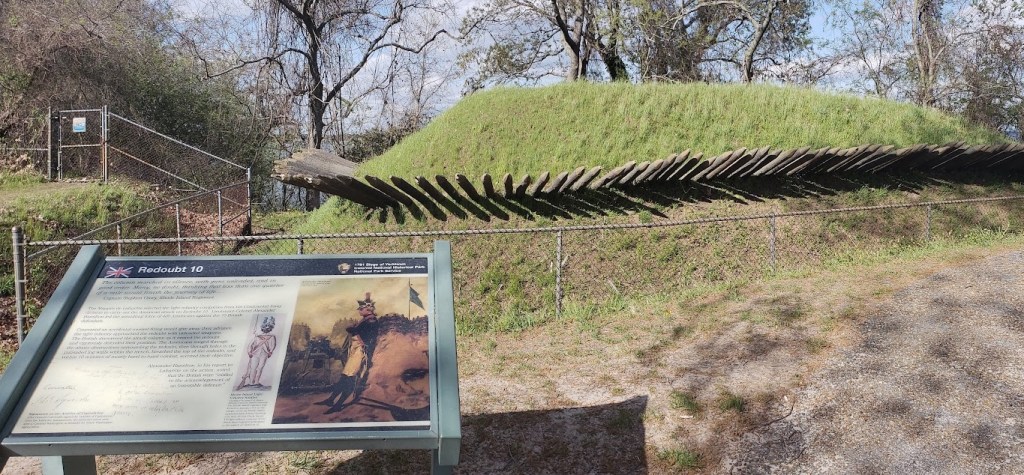
Perhaps the knowledge faded from my teenage high school history class, but I’m again learning of Yorktown’s significance in our national history. In a nutshell, American and French allies won decisive battles in the fall of 1781, signifying the end to British governance. Losses of Redoubts #9 & 10 were two of the last straws with which British General Cornwallis attempted to defend Yorktown from being captured on October 14th.
Backing up… We must recall how General George Washington, his Lieutenants, and French allies led by Rochambeau, ended a brutal six-year war for our freedom. These heroes and soldiers tirelessly fought on American soil directly for independence from an omnipresent oppressive government. Officially ratified later by the Treaty of Paris, we became free to live in ways that so many now take for granted.

I wouldn’t put so much of this information into our blog were it not so significant now, only a few days before what could be a decisive federal election.
Consider this when you vote, especially if considering the further empowerment of one promoting hate and calling names like a grade school bully, while openly admiring oppressive isolationist dictatorships, and claiming that his opposition and free press will be jailed. Our democracy exists because we question truthfulness and fitness for being president. That oppression is what we fought to end almost 250 years ago! Let’s not lose it!

Ok, now off my soapbox, let the message suffice to say we are gladly remembering that it’s not just the 4th of July and the Declaration of Independence that gave us freedom; it’s also the heroic feats made possible by international cooperation at Yorktown and the original fight for American freedom.
Moving on… After two calm evenings, we continued to motor south another 40 nautical miles to Hampton Virginia. Finding the namesake river filled to capacity with transient yachts, we backtracked only a couple miles back over the Chesapeake Bay tunnel to an area called Phoebus, right next to Fort Monroe.
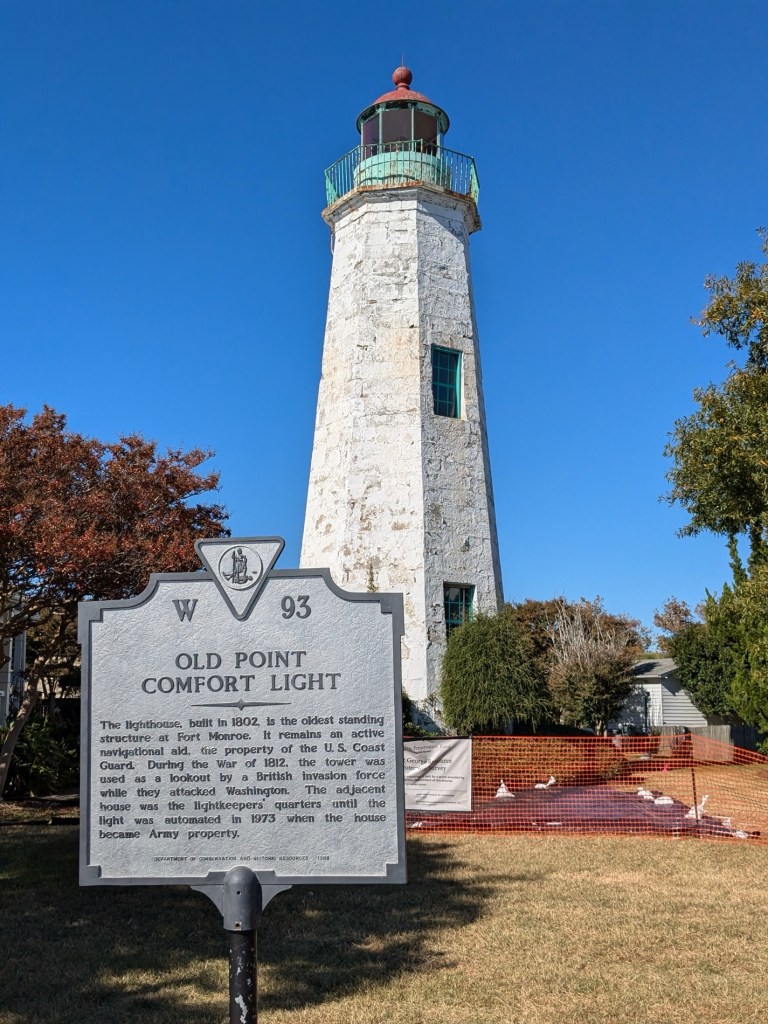
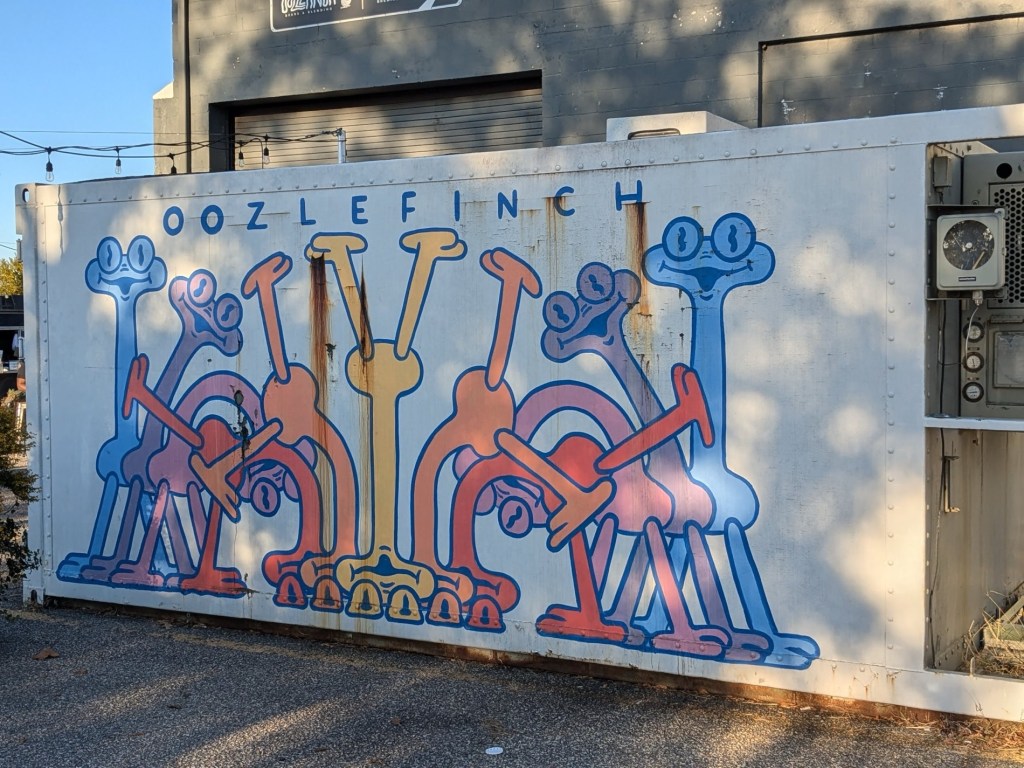


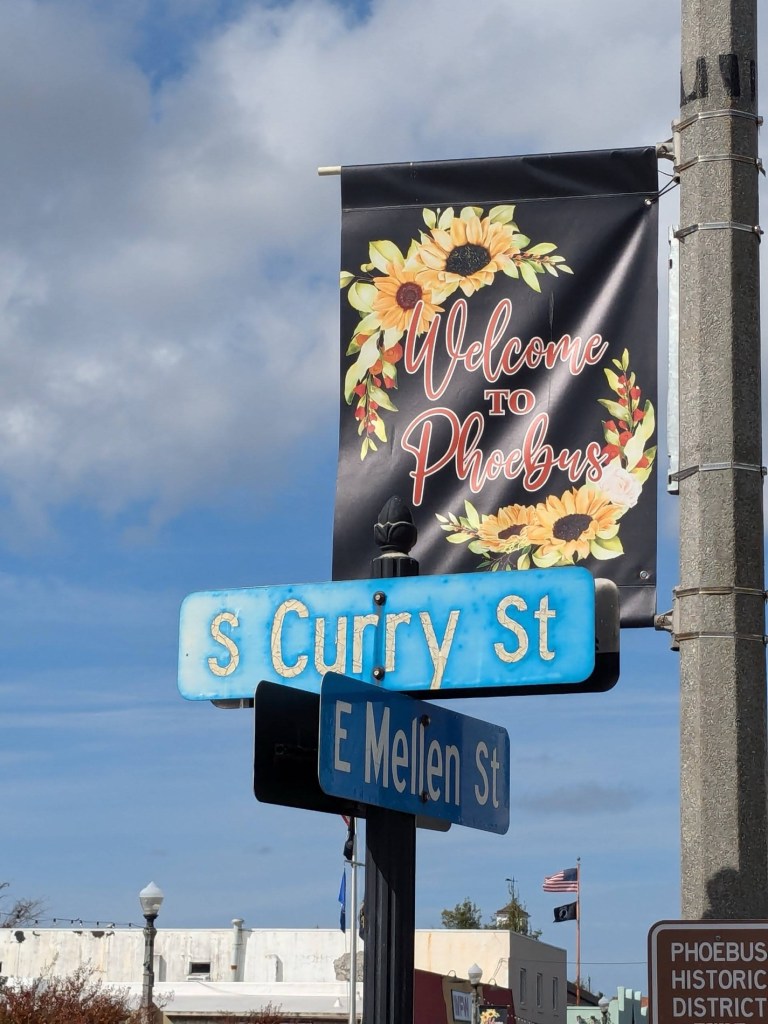
I’ve written about Hampton, Phoebus and Fort Monroe before, so won’t say much more here. We did manage to load up on groceries, and again visit our favorites: restaurant Brown Chicken Brown Cow, The Air and Space Museum , and breweries Oozlefinch and Bull Island.
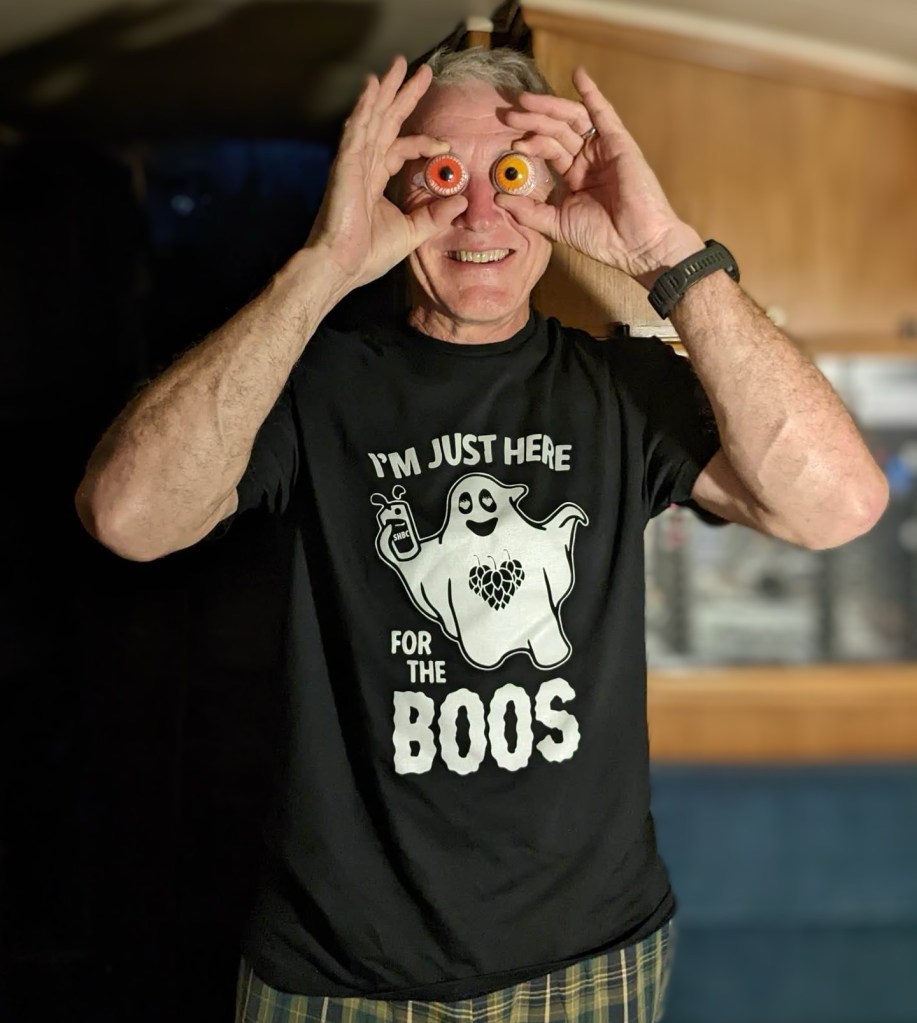
Happy Halloween!
 SV Fayaway
Travel and history pair well together. Why else to to a place but to get to know it?
LikeLiked by 1 person
I love your commentary. I live your travels vicariously!
Could not agree more politically. His unpredictability is so dangerous!
LikeLiked by 1 person
We love hearing from you Ken!
LikeLike
I love visiting historical sites. I’m always brought to tears by the sacrifice of others.
LikeLiked by 1 person