
Hmmm… I said as we rounded into the lee of the northern rocky extremety of Culebrita. Only one vessel appeared on AIS, showing its triangular green icon, unmoving, apparently at anchor in Bahia de Tortuga. A good sign, perhaps there’s no crowd. But once the little cove opened to view, at least ten power boats in various sizes were stern-tied to an anchor thrown onto the beach. Jet skis and a weekender tube-towing wakeboat raced around us, girls screaming and all.
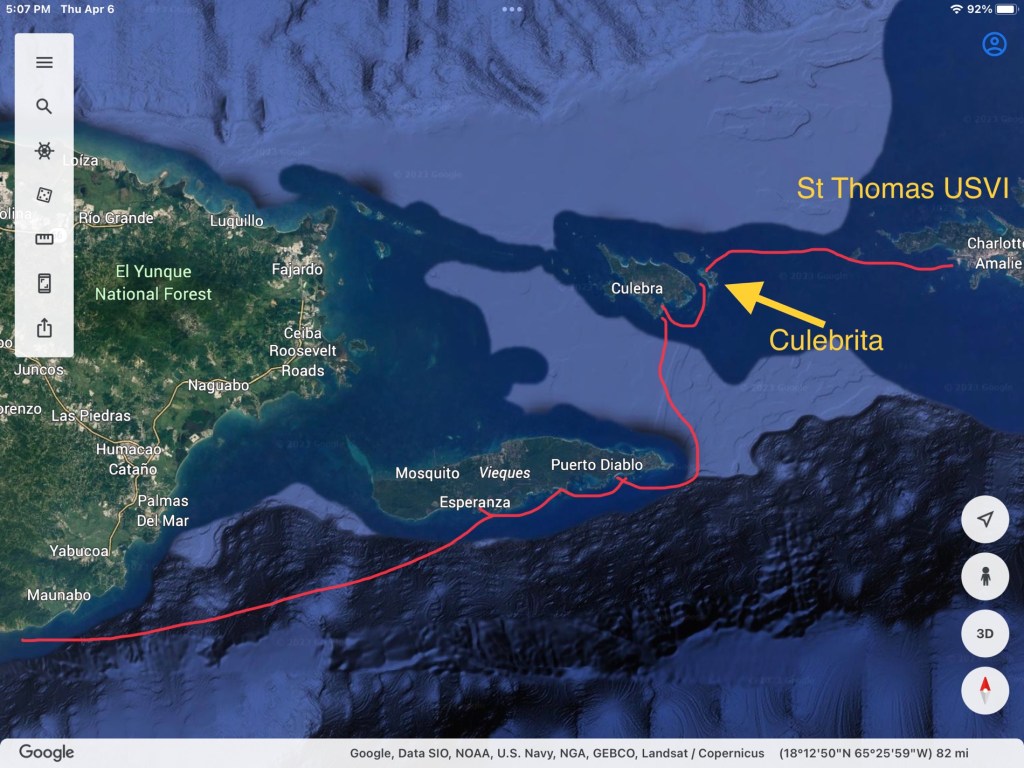
Only one other sailor was anchored away from the beach into deeper water, so we had plenty of wiggle room. With bad thumping music blasting we were just as happy staying away from those enjoying their weekend revelry. We circled around and dropped the hook in 15 feet, well away from shore, catching firmly into the packed sandy bottom.
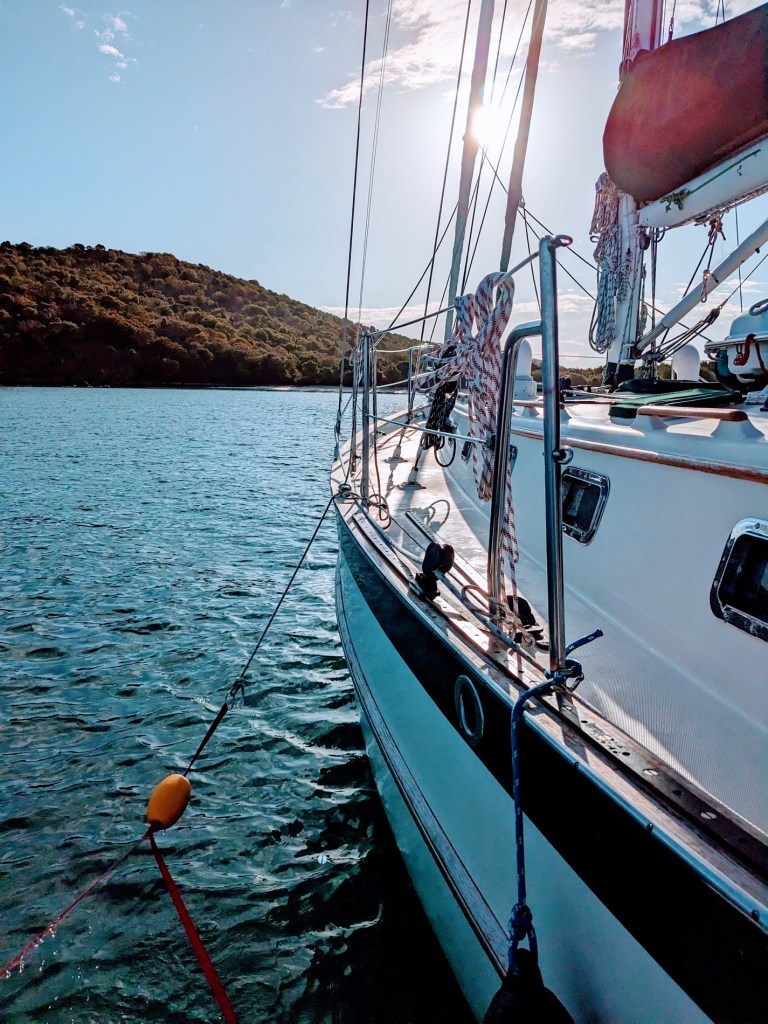
To our immense satisfaction, as soon as shadows grew long toward the east, every power-boater packed up their respective empty beer cans, sandy beach towels and loud stereos. Just before sunset, two more sailing vessels slowly crossed paths into the harbor. We sat back, relaxed and sipped our own malt beverages, watching two sea turtles (the bay’s namesake) nearby silently poking above the calming surface. How difficult for them to avoid the turbulent beach blast we had just witnessed? Almost audibly, we could hear their collective sighs of relief as they emerged from hidden corners of the bay.
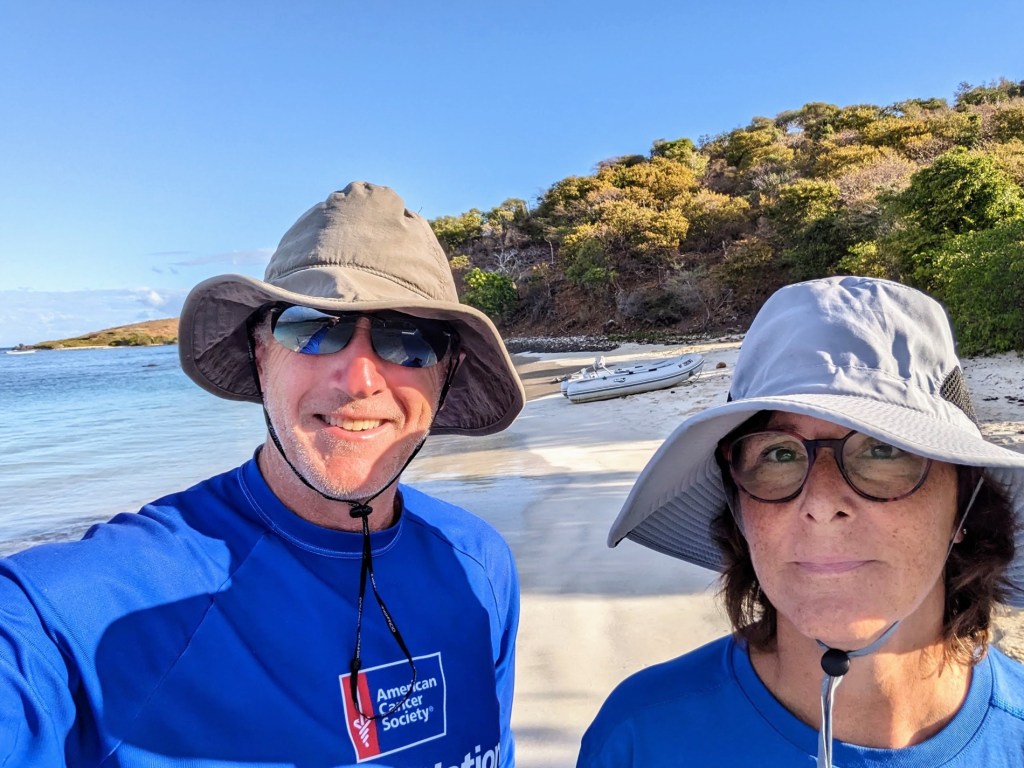
At about 0800 the next morning, we mounted the little Electric Paddle onto Korykory, flipped the switch and quietly approached the relatively surf-free far-eastern end of a secluded beach. The sound of light surf, soft sand and a few birds, mixed with a rising sun dominated our senses. After tying Korykory (like a horse) to a nearby high-tide mangrove branch, we strolled barefoot along the shore, northerly, away from the beach. The softer surface eventually became made entirely of eons of broken coral fragments.
As the high water met the jagged coral and protruding mangroves we banged a u-ey (Boston slang for an about-face, a U-turn, a “180”). Strolling back beyond Korykory’s beachfront tether, we found a path leading back through the thick mangroves and dry brush. Someone erected a cutesy artisan shop sign, pointing in the various directions.

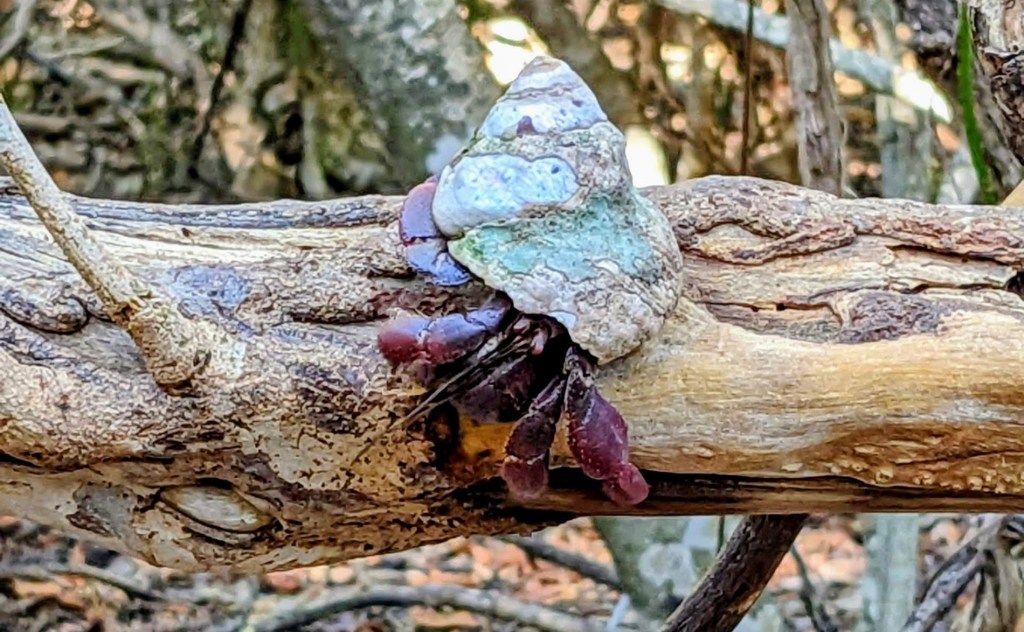
Hermit crabs littered the trail, and goats occasionally scattered as we ascended further inland. Do hermit crabs congregate on the trail for a reason, ready to be stomped upon? Circling back toward the west, we passed another spot Treasure Beach known for great snorkeling along another fringing coral reef line. Noting again the lack of boat traffic on this early Monday, we thought how nice a quick swim would feel in that protected crystal clear water. Nah, we still had some hiking to go. Maybe on the way back?
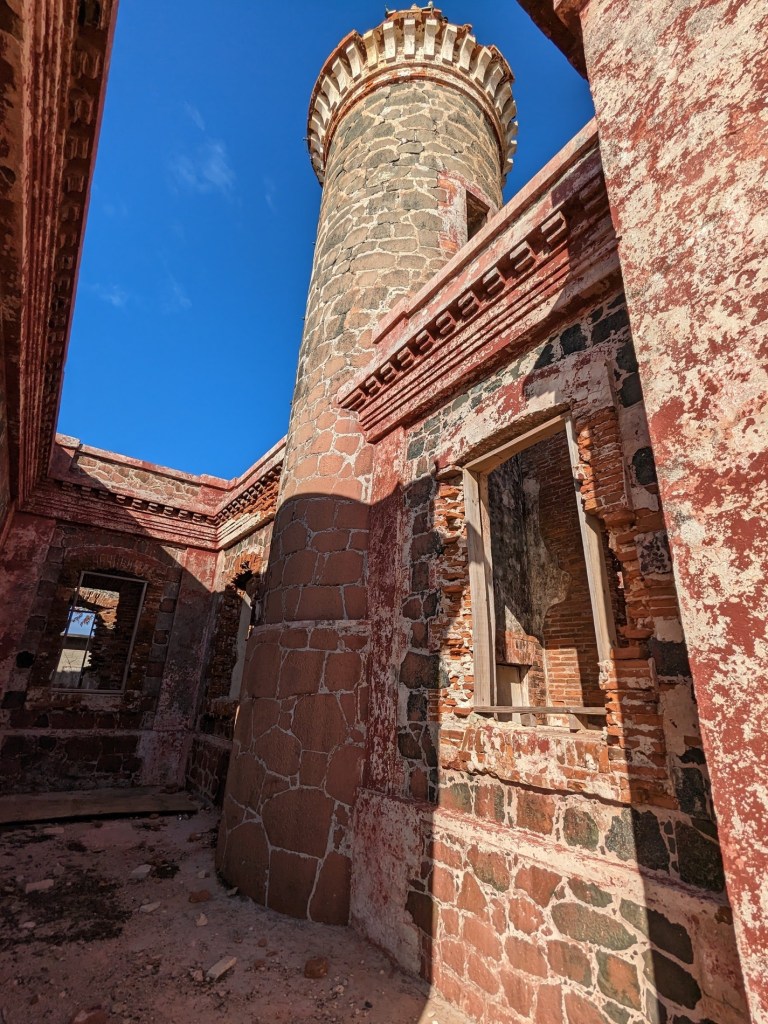
Alas we took a sharp left, up the old road to the lighthouse ruins. No obvious difference from three years prior during our last visit. Maybe a few more missing souvenir tiles. Very cool, just the same.
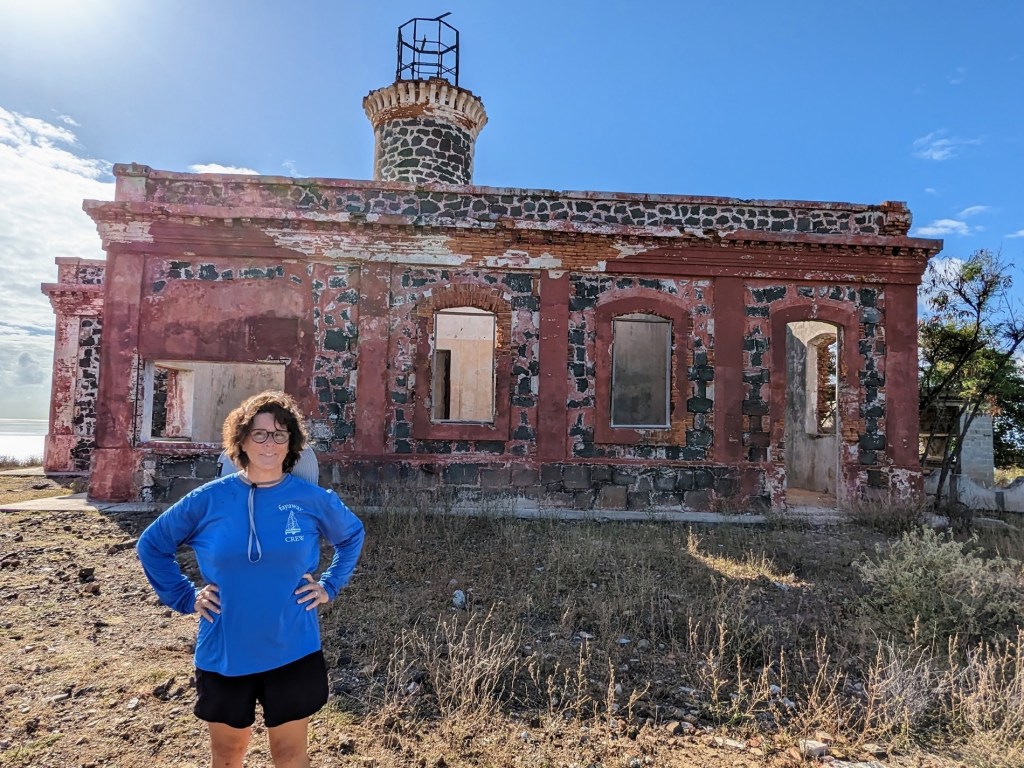
From Wikipedia: Culebrita Lighthouse is the only remaining Spanish-era structure in the Culebra archipelago. Construction of the lighthouse began on September 25, 1882, and was completed on February 25, 1886. The Spanish Crown built the lighthouse to help secure its claim over the main island of Culebra.

After our quick hilltop walk-about we retraced steps back to a patiently waiting Korykory on the beach. With floating bow pointing into the mild surf away from the beach, Kelly hops aboard. My longer legs allow a few more steps before I give a last shove forward and jump in. Before the waves move us backward, I tilt the motor back, twist the handle and hear the telltale electric whirrr… Soon thereafter, we’re tapping sand from our sandals, and climbing onto the mother ship of Fayaway.
Time for lunch. Between bites of tuna salad sandwich with diced pickles, we chat about plans for sailing to our next stop: Ensenada Honda on the southern coast of Culebra, only about an hour away on this beautiful sunny day.
Culebra, here we come!
 SV Fayaway
Great blog Chris. You’ll be a travel writer yet
LikeLike
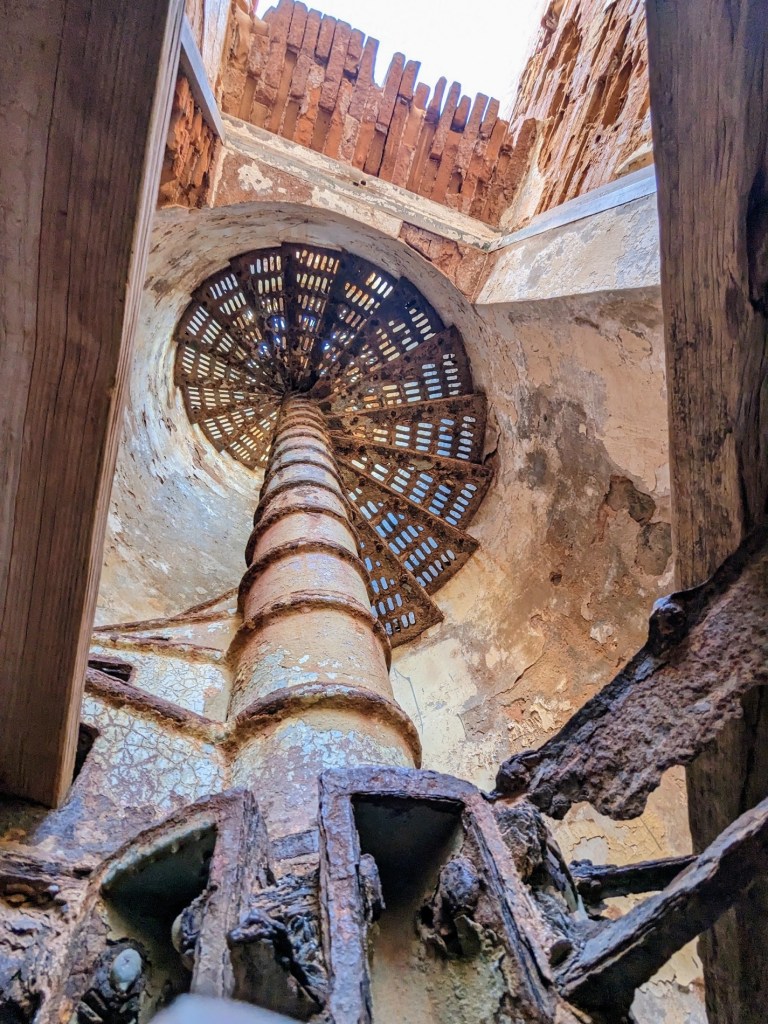
Electric Paddle? Intriguing… Do you decide which propulsion option to put on KK based on the intended task or trip? I would think it would be more appropriate for quick shore jaunts as you described, but not necessarily up to more daunting distances, currents, or surf. That staircase photo was a nightmare of tetanus, fall trauma, and puncture wounds.
LikeLiked by 1 person
Exactly! It is great for shorter runs to/from the beach, dock or another boat. Much quicker to install and use than the big 2-stroke. Since receiving the EP ten months ago, we’ve used it approximately 20% of the time. But when we do, it’s definitely worth having.
LikeLike