
Kelly and I wanted to explore other areas on Cape Breton Island – ones perhaps more difficult to reach from within the lakes aboard Fayaway or our little chariot Korykory. Amongst his many offerings, our de facto ‘Port Captain’ of Baddeck, Paul, kindly reserved for us a rental car in Sydney, about a 45 minute commute from our anchorage in Baddeck.
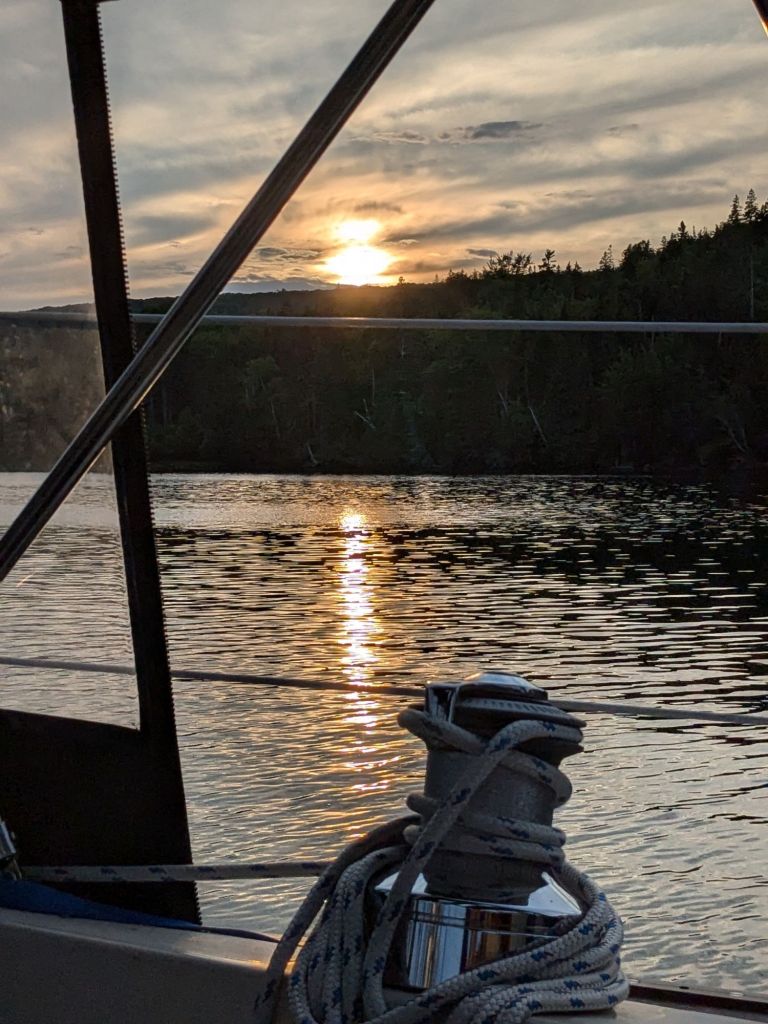
On this rare occasion we felt comfortable trusting Fayaway on her anchor overnight – this is a milestone. Safety and mud-holding is very good at Baddeck, and we have little concern of her dragging. So off we go!

We created an automotive itinerary to take full advantage of the next couple days via land, to explore East, North and West coasts beyond Baddeck.
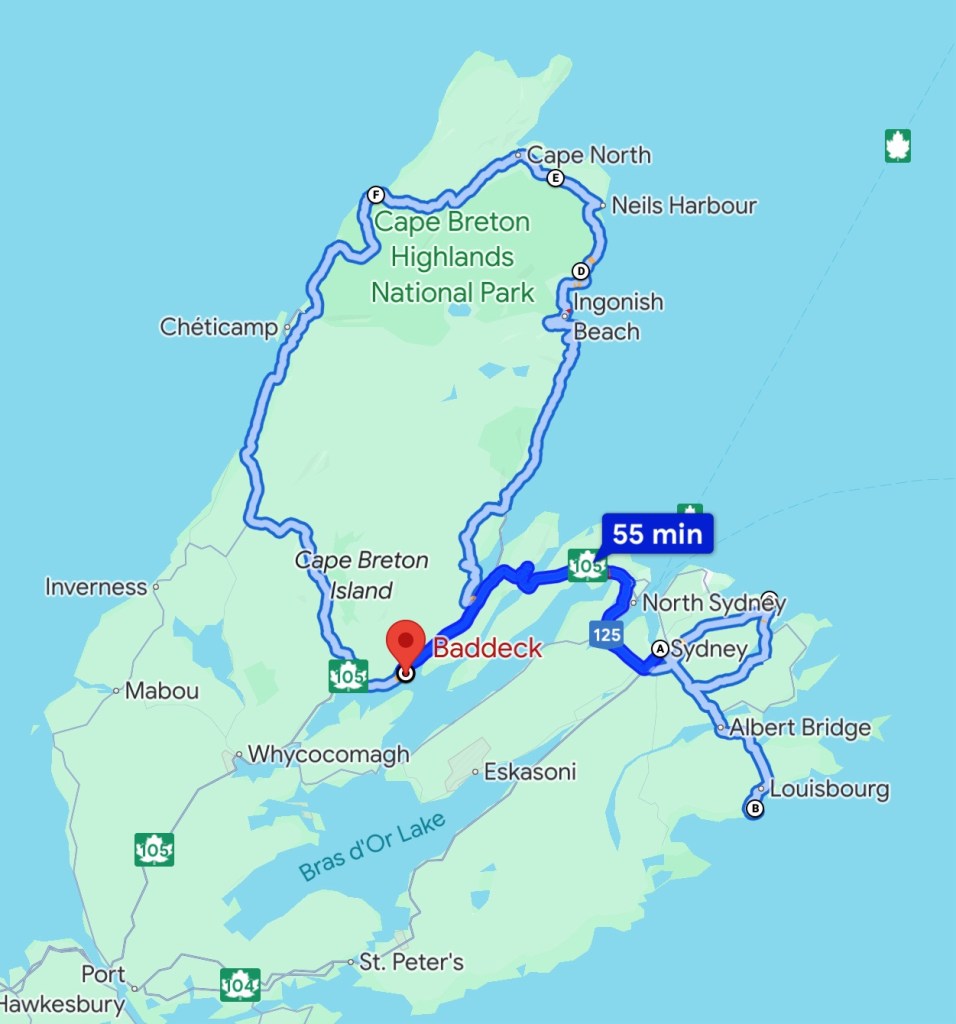
Stop #1: Fort Louisburg – the great fortress built by the French. The entire site is an authentic rebuild from the ruins of centuries ago, and of course, any true community would not be complete without a local brewery and rum distillery: Fortress Rum
Borrowed from parks.canada.ca:

The French came to Louisbourg in 1713, after ceding Acadia and Newfoundland to the British by the terms of the Treaty of Utrecht, which ended the War of the Spanish Succession. France's only remaining possessions in what is now Atlantic Canada were the islands of Cape Breton and Prince Edward, which were then called Isle Royale and Isle Saint-Jean. The French used these islands as a base to continue the lucrative cod fishery off the Grand Banks. In 1719 they began to construct at Louisbourg a fortified town which was only completed on the eve of the first siege in 1745. The town and settlement along the harbour shore soon became a thriving community.
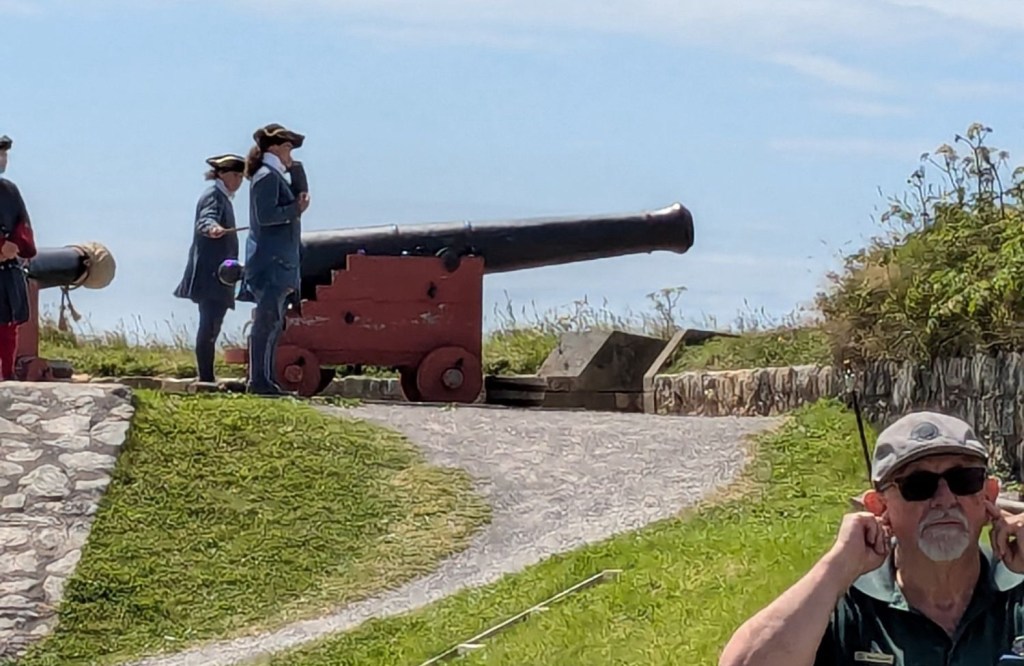
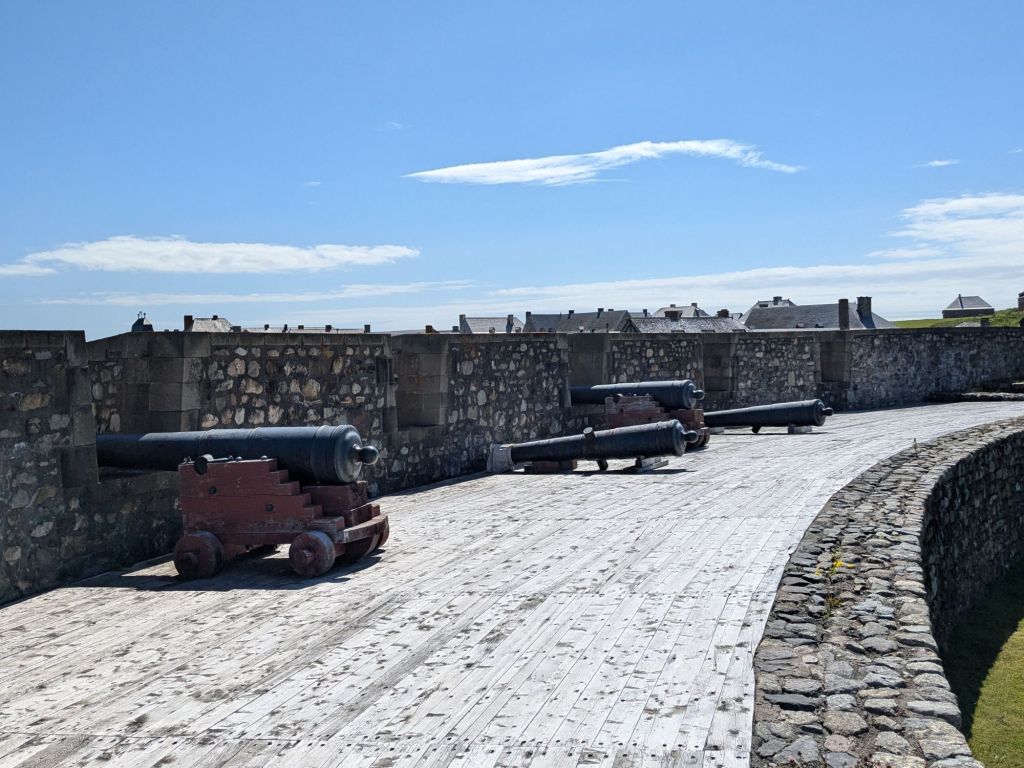
Unfortunately for the French, they focused defenses on a waterfront assault, with all cannons, but left the land side pitifully indefensible.
So, the first attack on Fort Louisbourg came in 1745 following a declaration of war between Britain and France. Charged with the fervour of a religious crusade, and informed that the fortress was in disrepair with its poorly supplied troops on the verge of mutiny, the New Englanders mounted an assault on Louisbourg. Within 46 days of the invasion the fortress was captured. To the chagrin of the New Englanders, only three years later the town was restored to the French by the Treaty of Aix-la-Chapelle. In 1758 Louisbourg was besieged a second time. Without a strong navy to patrol the sea beyond its walls, Louisbourg was impossible to defend. Attacking with 13,100 troops supported by a 14,000 crew on board 150 ships, a British army captured the fortress in seven weeks. Determined that Louisbourg would never again become a fortified French base, the British completely demolished the fortress walls and with it most of its interior.

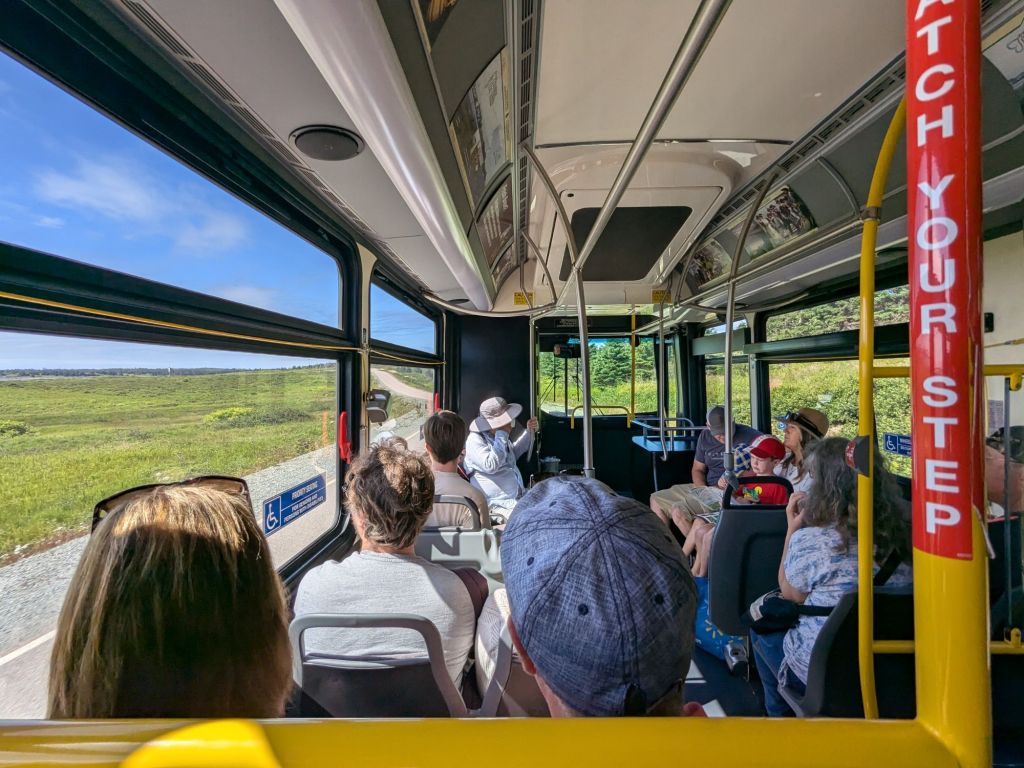
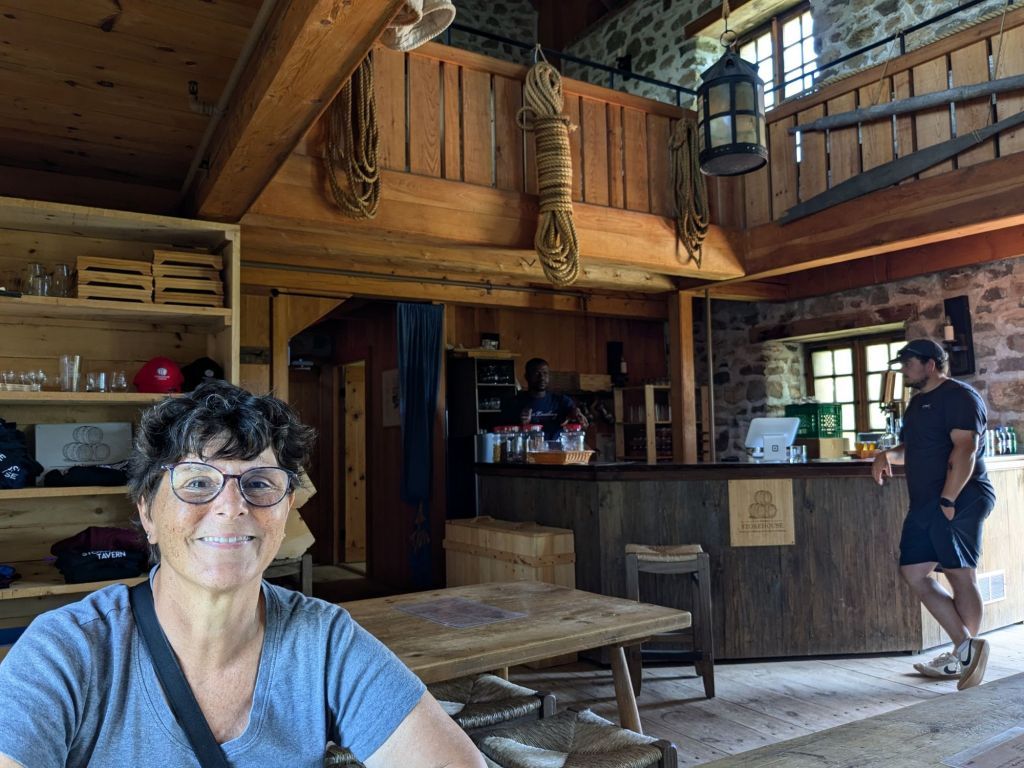
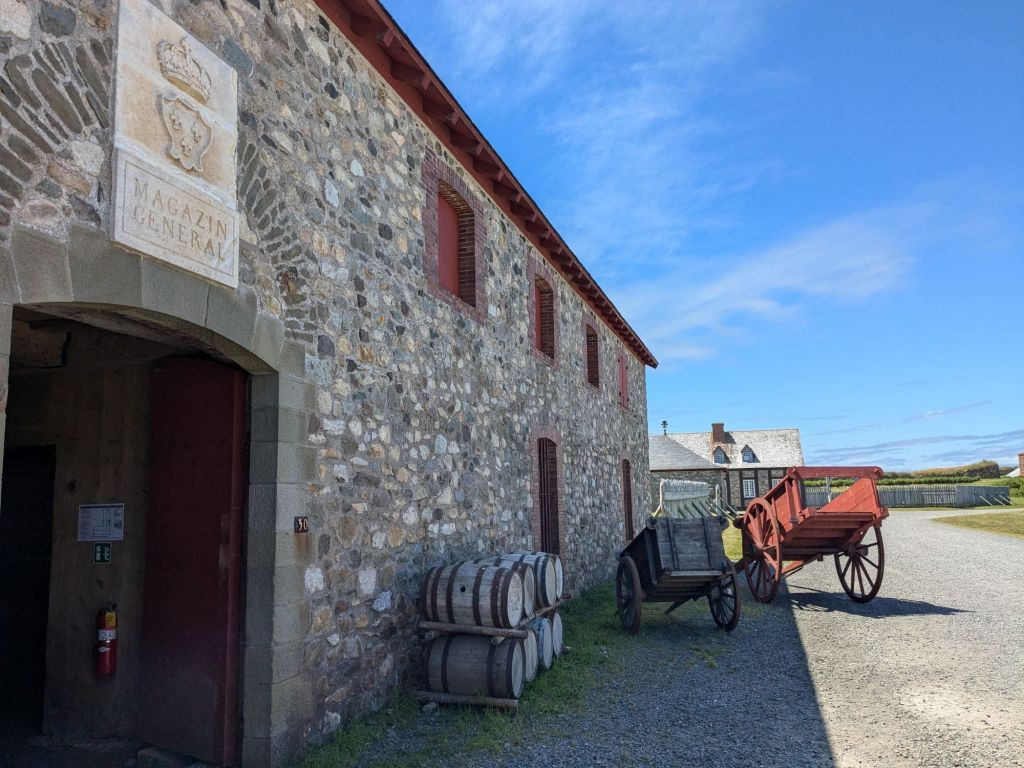

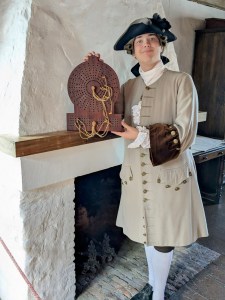
After a late charcuterie lunch complete with locally fermented malty beverages, we rode the shuttle bus back to our car, and set the GPS for the Marconi National Historic Site at Table Head. There we found a small museum and a cliff overlooking the North Atlantic.
Guglielmo Marconi patented his wireless telephone at age 23. A triumph of beginning a new era of global communications, here at Table Head, he achieved the first wireless trans-Atlantic connection to England on 15 December 1902. Cape Breton remained a vital location for Marconi’s work for many years. Nearby in Baddeck, Alexander Bell gave his friend Marconi an open invitation to stay at his estate.
Continuing west to our next stop, involved a very short ferry ride…

Next stop: North to Ingonish Beach (see above map) for dinner and rest at a seaside Air B&B. Tomorrow, we shirk off some laziness and hike to the interior of Highlands National Park. We continue following the scenic highway The Cabot Trail, which passes through the park, with many well-groomed hiking trails along its route.
Highlands National Park – a hike to Mica Hill
Given we’re deeply into tourist season, we invoked a friendly park ranger, inquiring about where to avoid crowds and find a beautiful hike off the beaten path. She explained that crowds don’t exist here, but suggested Mica Hill. Well folks, she said it would be quiet, but for our entire 7 mile hike, we saw only two other couples, and seemingly endless panoramic views for 98% of the trek, with otherwise absolutely no sign of humanity. She wasn’t kidding. No houses, stone walls, power lines, roads or anything but natural tundra, for 360 degrees as far as to the horizon. The literal namesake high point of our hike is where gobs of thick mica mineral deposits surround us underfoot.

Back across tundra to the rental car, glug some water and off down a dirt road again to points west in search of some chow…

Locally famous, Rusty Anchor sits high above a cliff commanding a panoramic view of the Gulf of St Lawrence.
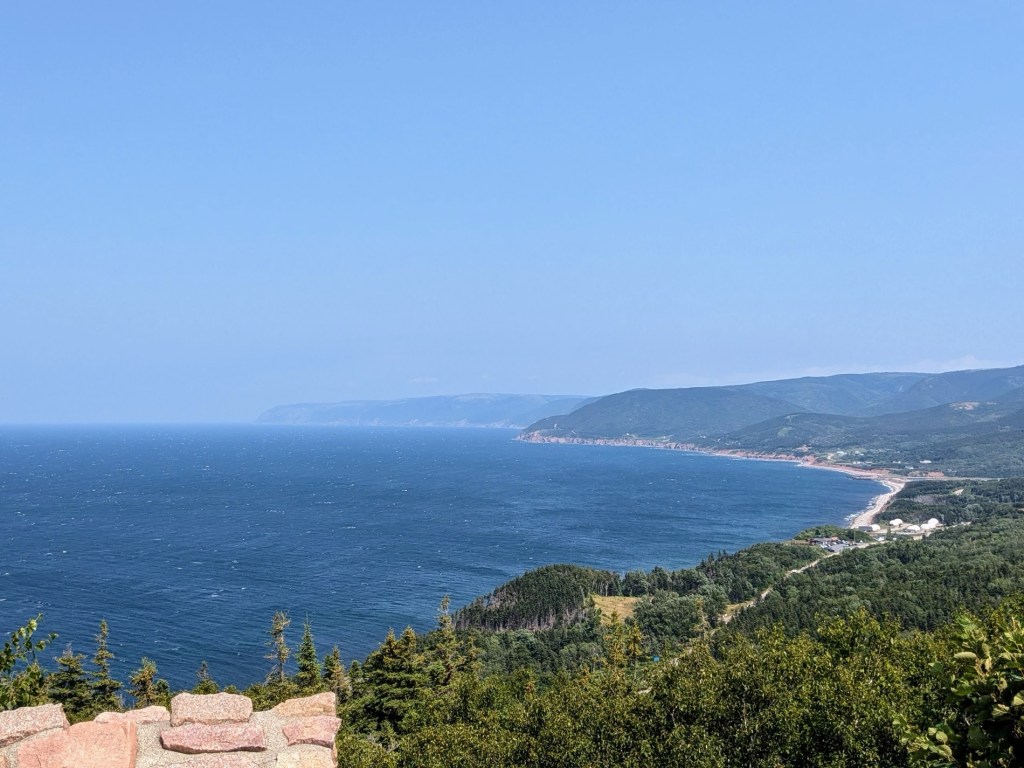
Back to Baddeck later in the day.
But first a couple more stops… A giant violin!

From a placard located at the John Harris Cruise Pavilion:

The Big Fiddle celebrates the important role fiddlers and their music have played in the cultural heritage of Cape Breton Island. Fiddle music was first brought to Cape Breton by Scottish immigrants. Today's music also features Acadian, Irish and Mi'kmaq influences. Fiddle music flourishes all over Cape Breton Island.

The Big Fiddle stands 17 metres tall and weighs eight tons. It is made of painted steel and was built over an eight-month period by Cyril Hearn, a Sydney artist and welder. Visit the Cape Breton Island Tourism Exhibition inside the cruise pavilion to see how the big fiddle was made and learn more about Cape Breton fiddle music.
Lastly, Walmart for haircuts and a liquor store for beers, before being picked up by Paul for the ride back to Baddeck. Fun’s over for today!
Back to find Fayaway – gladly still in same spot!
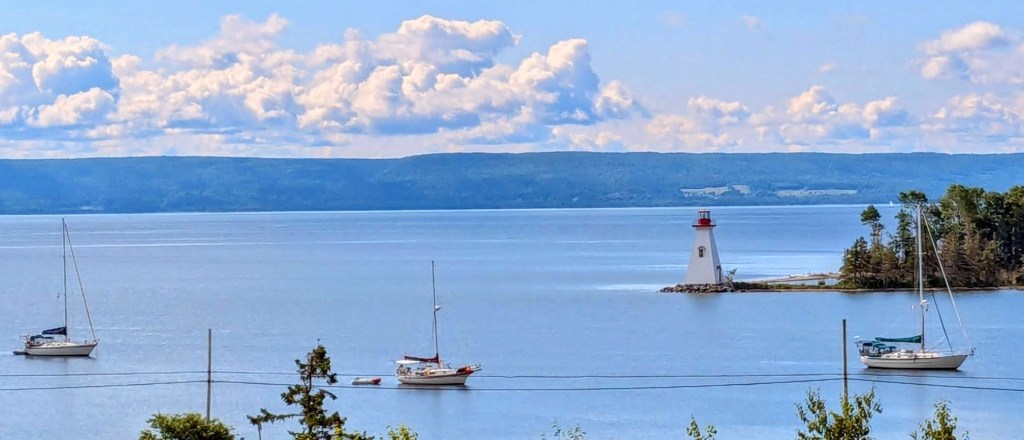
Next: Fayaway is heading back southwest, following the sun.
 SV Fayaway
Great read!
LikeLiked by 1 person